Nigeria
Thursday May 16, 2013
Suspected Boko Haram Gunmen Kill Christian Leader in Borno State, Nigeria
Pastor had refused to leave, saying God had called him to his people.
By Our Nigeria Correspondent
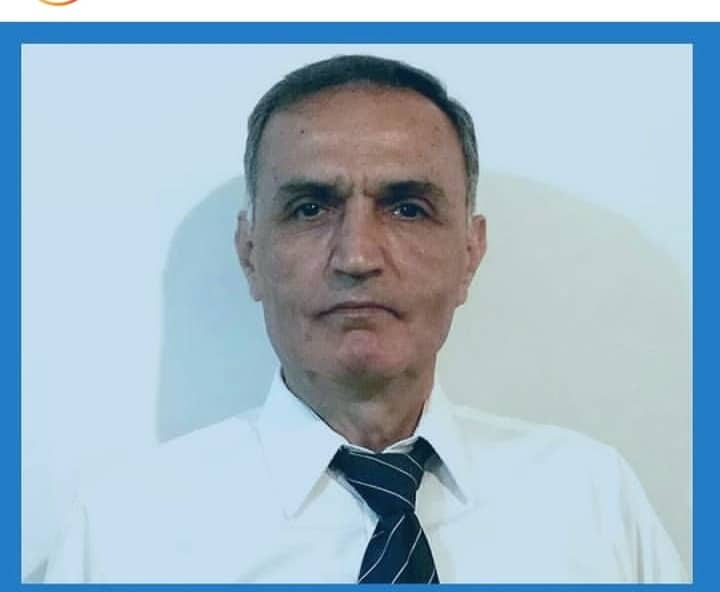
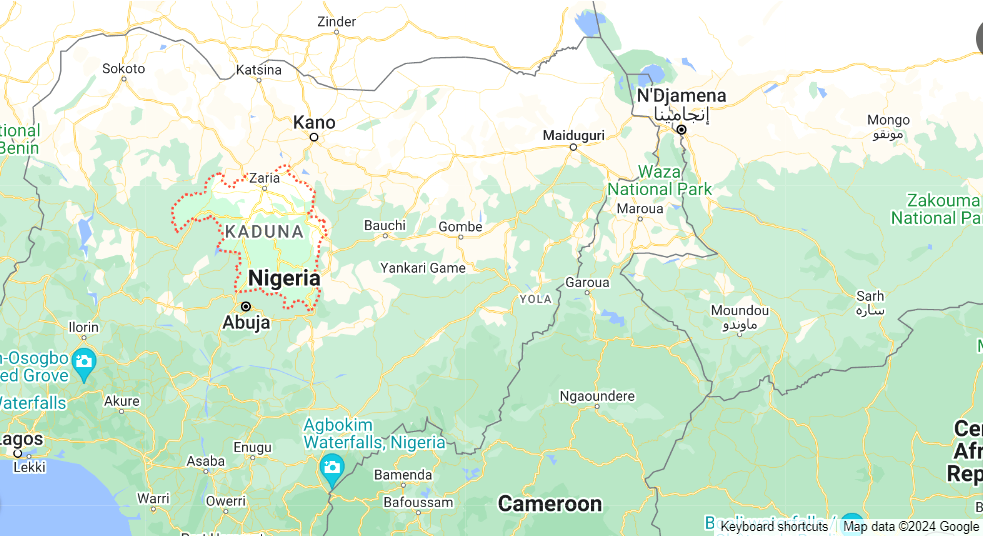
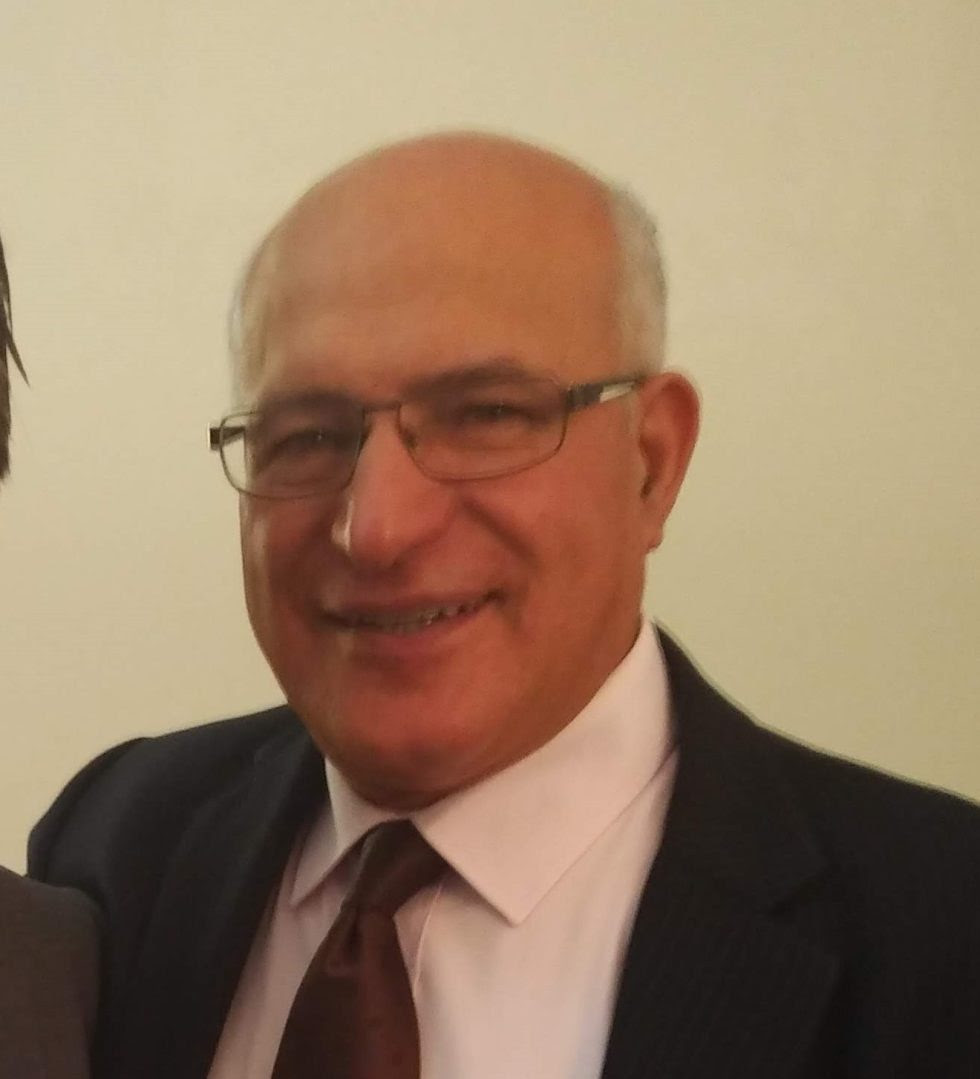
JOS, Nigeria, May 15, 2013 (Morning Star News) – Gunmen believed to be members of the Islamic extremist Boko Haram group yesterday killed the Rev. Faye Pama Musa, secretary of the Borno state chapter of the Christian Association of Nigeria (CAN). He was 47.

The gunmen reportedly followed the long-time Christian leader from his church building, where he was holding an evening Bible study, to his house in the Government Reservation Area in Maiduguri, and shot him dead there, said the Rev. Titus Dama Pona, chairman of CAN's Borno chapter.
“Rev. Faye Pama was killed last light,” Pona said this morning by phone from Maiduguri, the state capital. “I am right now with his family, and they are still consulting on what next to do.”
The assailants reportedly dragged the pastor from his home and shot him outside, in front of this daughter, who had followed them out pleading for his life. Pama was the father of three children.
Senior pastor of a Pentecostal church, Rhema Assembly, Pama often spoke out against persecution of Christians in Borno state, epicenter of Boko Haram attacks in northeastern Nigeria. He had been involved in ministry leadership for more than 26 years.
The shooting happened within an hour of President Goodluck Jonathan declaring a state of emergency in Borno, Yobe and Adamawa states, allowing the government to send more troops and take other special measures to try curbing violence by Boko Haram. The group has reportedly killed more than 4,000 persons since 2009, and the state of emergency comes after a gun battle between the military and Boko Haram in Baga, Borno state last month that some say took more than 100 civilian lives.
In a 2007 interview, Pama had said that he would not leave Borno state in spite of the danger to his ministry and life from Islamic extremists.
“I am an indigene of Borno state, and God has called me to work among my people,” he said. “I believe that the best people who reach a people with the gospel are those who understand the culture of these people.”
Pama believed that only by showing love to Muslims could they be won to Christ, “and not through fighting.”
An outspoken critic of the marginalization of and discrimination against Christians, Pama began preaching first with a Pentecostal ministry in Maiduguri, the Word of God Mission, in 1996, before he left to start Agape Ministries and planted Rhema Assembly. Rhema Assembly has an associate pastor and about 200 members.
He once served as secretary of Borno state’s chapter of the Pentecostal Fellowship of Nigeria.
President Jonathan had also imposed a state of emergency in 2011 on 15 areas within four states in embattled northern Nigeria, with little success. Boko Haram, which the Borno governor says threatens to take control of the state, seeks to destabilize the federal government in an effort to impose strict sharia (Islamic law) throughout Nigeria.
Boko Haram has attacked Christians particularly in Adamawa, Borno and Yobe states, destroying Christian-owned businesses as well as harming churches. Many Christians have fled as displaced persons or become refugees in Cameroon.
Suspected members of the Islamic extremist group also attacked a police barracks on the outskirts of Bama Town, Borno state early on Sunday (May 12), according to Christian Solidarity Worldwide. CSW reported that insurgents arrived shouting “Allahu Akbar [God is greater]” before launching explosives and fuel bombs, and the army dispersed them before lives were lost. The previous week, according to CSW, some 200 Islamic militants attacked Bama Town, killing 47 people.
Egypt
Thursday May 16, 2013
Teacher Accused of Blasphemy in Egypt Released on Bail
Investigation continues even though school, government found no wrongdoing.
By Our Middle East Correspondent
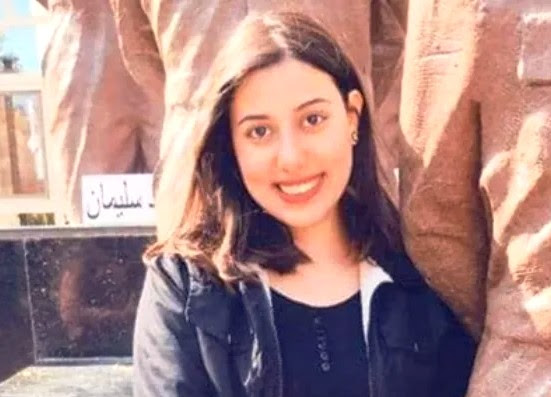
CAIRO, Egypt, May 15, 2013 (Morning Star News) – A Coptic Christian teacher in Egypt accused of committing blasphemy and evangelizing in school was released yesterday after posting nearly $3,000 in bail.
A judge reversed a May 11 order that elementary social studies teacher Dimyana Obeid Abd Al-Nour remain in jail for 15 days after she posted bail of 20,000 Egyptian pounds (US$2,864). She awaits a court hearing next week to see if she will be formally charged with a crime, rights advocates said.
Mohammed Noubi, a human rights advocate with the Luxor office of the Egyptian Initiative for Personal Rights (EIPR), who is working with Al-Nour’s lawyers, said Al-Nour was at home struggling under the weight of the accusations and investigation.
“The situation is really bad; she is emotionally devastated,” Noubi said.
Her court hearing is set for Tuesday (May 21), according to court documents. The prosecutor general’s office continues its investigation; if attorneys there decide to formally charge her, prosecutors could go forward with a trial the same day.
On April 10, three elementary schoolchildren at Sheikh Sultan Primary School in the village of Al-Edisat, Luxor Province, along with their parents and some teachers, complained to the school administration that Al-Nour had made blasphemous comments while teaching. Two days earlier, she taught a class about the pharaoh Amenhotep IV, later known as Akhenaten, who did away with all other Egyptian gods in favor of sun worship in ancient Egypt.
Al-Nour reportedly expressed her admiration for the former head of the Coptic Orthodox Church, the late Pope Shenouda III, in class. In some versions of the alleged incident, she also made comparisons between Shenouda and Muhammad, the prophet of Islam.
When the complaint was made, a group of head teachers and parents, known as the School Council, conducted an investigation into the allegations. They found there wasn’t any reliable evidence that Al-Nour had committed any offense, according to EIPR sources.
When the students were questioned, three of them said she had said or done something wrong. The rest of the class however, 10 students in all, said Al-Nour was blameless, EIPR found. A survey of the staff at the school revealed that she was widely respected by her colleagues, according to EIPR.
The School Council’s report was turned into the provincial governor’s office and to the legal department of the local office of the national Ministry of Education, which then conducted its own study; like the School Council, it found no crime had been committed.
The case likely would have been dropped, but two attorneys representing the parents of one student went directly to the prosecutor’s office, obligating officials to conduct their own investigation. In what are known as “hisba cases,” Egyptian law allows citizens to file lawsuits against anyone who has transgressed the “exalted right of God.” Many blasphemy cases are filed in such a manner.
On Thursday (May 9), a judge ordered that Al-Nour be remanded to jail while prosecutors investigated the incident. Two days later, the judge then ordered that she be held for 15 more days, and the order was negated when the family was able to post bail.
During her imprisonment, Al-Nour went on a brief hunger strike, but her family talked her out of it, according to EIPR and Al-Nour’s attorneys. Contrary to reports by multiple media outlets, Al-Nour was never hospitalized because of the hunger strike.
Egypt
Tuesday May 14, 2013
Jail Time Extended for Teacher Accused of Blasphemy in Egypt
Study shows Christians disproportionately accused, sentenced.
By Our Middle East Correspondent
CAIRO, Egypt, May 13, 2013 (Morning Star News) – A judge in Egypt on Saturday (May 11) ordered 15 days of additional incarceration for a Coptic Christian teacher jailed last week on accusations of blasphemy and evangelism.

Three elementary schoolchildren and some teachers in the village of Al-Edisat, Luxor Province had complained on April 10 about social studies teacher Dimyana Obeid Abd Al-Nour, who rotates among three schools in the area. They accused her of making allegedly blasphemous comments while she was teaching on April 8 about Amenhotep IV, later known as Akhenaten, a pharaoh who introduced a form of monotheistic theology to ancient Egypt.
Accounts differ, but in some versions of the alleged incident, Al-Nour also made comparisons between the former head of the Coptic Orthodox Church, the late Pope Shenouda III, and Muhammad, the prophet of Islam.
The three students from Sheikh Sultan Primary School, along with their parents and a handful of teachers, complained to the school administrator, and school officials contacted legal authorities. Al-Nour has not been charged, but on Thursday (May 9) the judge ordered her to be held in prison for four days pending the outcome of an investigation by the general prosecutor’s office.
Human rights group Amnesty International condemned the detention and demanded Al-Nour’s release in a press statement.
“It is outrageous that a teacher finds herself behind bars for teaching a class,” stated Hassiba Hadj Sahraoui, deputy Middle East and North Africa program director at Amnesty International. “If she made some professional mistake or deviated from the school curriculum, an internal review should have sufficed. The authorities must release Dimyana Obeid Abd Al-Nour immediately and drop these spurious charges against her.”
The blasphemy and evangelizing accusations against Al-Nour reflect two growing trends in Egypt – disproportionate use of the nation’s blasphemy statutes against members of Egypt’s Christian minority, and blasphemy charges against people working in education, human rights officials said.
“The education system in Egypt is not based on thinking and freedom of expression, but on copying without knowing, and the absence of a forgiving culture, and refusing the other – not accepting the other,” said Ishak Ibrahim, freedom of religion and belief officer for the Egyptian Initiative for Personal Rights (EIPR).
Ibrahim said people are targeting Christians using the nation’s blasphemy statutes as a weapon. An EIPR study to be released at the end of this month found that 41 percent of blasphemy cases taken to court from Jan. 25, 2011, to Dec. 31, 2012, were filed against Christians, who make up only about 10 percent of Egypt’s population of 84.5 million people.
The total of 36 blasphemy cases involved 63 people. The country’s Sunni Muslim majority, which makes up almost 90 percent of the Egypt’s population, were charged in 59 percent of the cases.
Of the 36 blasphemy cases brought to court, only one case was filed against someone for blaspheming Christianity – in spite of a near-constant din of insults by the nation’s religious leaders against Christians and Christianity on Egypt’s television and radio airwaves. That single case, a blasphemy charge against Sheik Abu Islam for publically burning a Bible in front of the U.S. Embassy in Cairo, was dismissed. A private Coptic attorney is trying to re-file the case.
Al-Nour, in her early 20s and in her first year as a teacher, is not alone as an educator accused of blasphemy. Ibrahim noted that approximately 30 percent of the blasphemy cases filed have been filed against someone in an education environment.
Not all those charged have been sentenced, but so far five teachers, one schoolmaster, one school secretary, one activity supervisor, three students, three university teachers and five university students have either been sentenced to prison, fired from their jobs, forced from school or forced out of their homes by the courts or decisions handed down by “reconciliation councils,” according to EIPR.
Along with the disproportionate number of Christians charged with blasphemy, sentences are harsher for Christians compared with those handed to Muslims, EIPR noted. The study notes that the sentences are also unusually harsh in relation to the nature of the offenses.
One case of biased punishment involved Makarem Diab, 50, a Christian who received six years in prison on Feb. 29, 2012 for what amounted to an argument with a Muslim coworker over religion. Diab and Abd Al Hameed worked at Deer Al Gabrawy Prep School in the town of Abnoub in Assuit Province.
While Al Hameed made the inflammatory claim during the argument that Jesus had had sex with at least 10 women, Diab countered by stating that Muhammad had more than four wives – a view commonly held by Islamic scholars, though disputes arise over whether he had more than four wives over the course of his life or at one time.
Al Hameed was not charged for his comment.
“It’s bigotry,” Ibrahim said. “One person got sentenced, and the Muslim got away with it.”
Ibrahim said he expects to see an increase in charges against Christians; the new constitution employs vague language that could prohibit evangelism, though evangelism is not specifically illegal. At the same time, the new constitution more explicitly criminalizes criticism of Islam.
“It is getting worse, with the change of the constitution, as there is a specific sentence that punishes those who insult Islam,” he said.
Nigeria
Tuesday May 14, 2013
Anti-Christian Hostility behind Boko Haram Killing Spree in Nigeria
Islamic extremist assault leaves 14 Christians dead.
By Our Nigeria Correspondent
MIDLU SHALMI, Nigeria, May 10, 2013 (Morning Star News) – Anti-Christian hostility drove an Islamic extremist killing spree in this village in northeastern Nigeria, though the attack was portrayed mainly as politically motivated, an area Christian leader says.
In the course of an attempt to attack the deputy governor of Adamawa state last month, gunmen from the Islamic extremist group Boko Haram killed 14 Christians, including the cousin and two nephews of the Rev. Moses Thliza, head of a Christian organization dedicated to preventing AIDS and caring for AIDS patients and orphans.
“My cousin, Bulus Buba, was dragged out at gunpoint from his house by the Boko Haram members,” Thliza told Morning Star News. “They collected his car keys, demanded money and asked him three times to renounce his Christian faith, and three times he declined to do so.”
Thliza’s two slain nephews were skilled volunteers at the organization he heads, Christian Faithful Fight AIDS in Nigeria (CFFAN), and their passing has left huge gaps in the organization, he said. CFFAN’s work centers on AIDS prevention, care of orphans and treatment of those infected with HIV and AIDS, as well as training of pastors. The organization provides services in Plateau, Gombe, Taraba, Adamawa and Borno states.
Thliza and another eyewitness, Usumam Ijarafu, said about 30 of the masked attackers – identified in local press reports as members of Boko Haram – arrived in two vans in Adamawa state’s Midlu Shalmi village, in the Madagali Local Government Area, at about 1:40 a.m. on April 7 and set upon a Church of the Brethren Church (EYN) building. Over the next three hours, they also attacked the residence of the deputy governor of Adamawa state in the village and a house where Christians were mourning at a wake.

“They also went the pastor’s house of our [EYN] church in the village, where on sensing that armed men had stormed the church, the pastor escaped, but the attackers held his wife, Shuwa Ishaya, at gunpoint,” Thliza said.
The gunmen ordered her to lead them to the house of the church treasurer, but as they approached, he too escaped from his home, Thliza said. The Islamic extremists then proceeded to the house of state Deputy Gov. Bala James Nggillari, where they killed two guards keeping watch and held a third at gunpoint.
“The attackers met three guards on duty, killed two of them by cutting their necks with knives, and then proceeded to take the third guard, Amtagu Samiyu, at gunpoint to lead them to where the keys of the deputy governor’s house is,” Thliza said. “He led them to the house of my nephew, Ezra Isanga, about a kilometer south of the village, where his wife keeps the key to the deputy governor’s house. Ezra on opening the door of his house discovered that the men wore masks, and then he shut the door and ran out through a back entrance, raising alarm that Boko Haram men were in the village.”
The members of Boko Haram, which seeks to destabilize the Nigerian government and impose sharia (Islamic law) nationwide, took Isanga’s wife, Amina Ezra, at gunpoint. They took her also to the house of the deputy governor, gaining access with the keys in her possession. The official was not at home, so they only stole some items from his house, Thliza said.
“The noise from the confusion outside attracted the attention of two brothers, Ibrahim and Samuel [Bitrus], who as I said were my nephews,” Thliza said. “Both went out to see what was happening, and they were held at gunpoint, dragged into a room and shot by the Boko Haram members.”
Boko Haram identified two other people in the village square as Christians and killed them, he added.
Christians were observing the wake two kilometers away. Thliza said assailants asked to know what was going on there, and when they learned that people were saying prayers for an elderly Christian woman who had died, they charged in and shot into the crowd.
“The attackers went there and shot indiscriminately at the worshippers, killing eight Christians – two women and six elderly men,” he said. “In all, we buried 14 Christians. Some were injured and taken to the hospital.”
Christian leaders made efforts to contact security officials during the shootings, but no help came until the following morning, he said.
“Bulus Buba’s car was taken away too by the attackers after they killed him,” Thliza said. “While the attack on our village lasted, another group of Boko Haram members went to Abuja and kidnapped the daughter of the deputy governor, who hails from our village, but she was released shortly after.”
It was the first such attack at Midlu Shalmi, a village some eight kilometers (five miles) off the Maiduguri/ Yola highway about 300 kilometers (186 miles) from Yola, the state capital. Among those killed in Midlu Shalmi, according to Thliza, were Issa Ngga, Ayuba Yuguda, Ijabani Wagai, Hiszikia Joseph, Uludili Thlimda, Zara Ijabani, Jesse Waida, Iliya Buti, Kwaji Buti, Mjigimtu Usumana, and Mara Ijigil.
Neighboring villages were attacked prior to the Midlu Shalmi assault, Thliza said.
“The other villages attacked earlier include Madagali, 12 miles from my village, and Gulak, nine miles away, on two different occasions,” he said.
Besides the EYN church, Midlu Shalmi village is also home to Deeper Life Bible Church and Roman Catholic charismatic congregations.
“Political motive has been read into this attack, but this is not true because all the victims are not politicians,” Thliza said.
Jihad
The deadly assault was one of the latest religiously motivated attacks by Boko Haram. The group has stated that the sole purpose of its campaign of violence is to establish an “Islamic state like during the time of Prophet Muhammad,” though the U.S. Department of State continues to insist that the group is motivated by poverty and marginalization.
In its annual report released last month, the U.S. Commission on International Religious Freedom (USCIRF) notes, “The U.S. government consistently has urged the Nigerian government to expand its strategy against Boko Haram from solely a military solution to addressing problems of economic and political marginalization in the north, arguing that Boko Haram’s motivations are not religious but socio-economic.”
Advocacy group Jubilee Campaign, in an April 29 report on the State Department’s most recent country report on Nigeria, objected to the government’s position.
“The claim that the Muslims of northern Nigeria have been marginalized politically and economically by the federal government and responded to ‘legitimate grievances’ with violence is not credible,” the Jubilee Campaign report states. “This has been used to give unconscionable and undeserved legitimacy to violence committed against Christians in northern Nigeria, whether by terrorist actors such as Boko Haram or others.”
Jubilee Campaign states that Boko Haram has used religion as its primary recruiting tool, and that statements by the Islamic extremist group’s leaders reveal their motive for violence is “unambiguously waging Jihad.”
“No reference is made in the DOS [Department of State] report to their declared motive,” the Jubilee Campaign report states.
Thliza said the government of Nigeria must do more to stop Boko Haram.
“The truth is that Boko Haram is waging a Jihad, a religious war against Christians and the government, with the intention of establishing an Islamic state,” he said. “No government should allow a group of people to forcefully take over the governance of the people.”
Christians make up 51.3 percent of Nigeria’s population of 158.2 million and live mainly in the south, while Muslims account for 45 percent and reside primarily in the north, according to Operation World.
While Christians have shown great restraint in the face of attacks by Boko Haram and other Islamic extremists, the government must see Boko Haram violence as problem that requires bold confrontation, he said.
“As Christians, our prayers have always been that God should touch the heart of terrorists, that they will repent, and that their evil plans against Christians will be revealed,” he said.
Loss
Thliza’s slain nephews, 39-year-old Ibrahim Bitrus and 29-year-old Samuel Bitrus, were the sons of his younger brother Bitrus Kutiji Thliza.
“The murder of Ibrahim by the terrorists is devastating to us, because he has died leaving behind and aged mother and three kids – one of them was just born in January,” he said. “His death is no doubt devastating to our ministry and family.”
Ibrahim Bitrus was an information technology expert and program manager in three states for the ministry.
“Ibrahim, whether or not we have money, was prepared to work,” Thliza said. “He worked hard back home teaching at the Government Secondary School and at the same time serving the ministry. So, his death has impacted heavily on our ministry.”
The elder nephew, born in Thliza’s house while his father was serving in the military, had been trained at the ECWA Information and Computer Science Institute in Jos through Thliza’s sponsorship.
“Nobody has the training and capability of Ibrahim – even though he was not a health care worker, he had acquired enough experience in serving the ministry, which enabled him to do extremely well,” he said. “I relied on him without doubt to handle any project.”
Besides heading the program office in Madagali, Ibrahim Bitrus handled AIDS projects in Taraba and Gombe states, he added.
“We are praying that God will raise someone to replace him, but his death is indeed a great loss to us,” Thliza said.
Samuel Bitrus worked as an accountant and information technology expert as a volunteer, he said.

“This is a health care project, work that requires specialized training,” Thliza said. “More so, this is a faith-based organization. So we need people who share in the vision and who will work sacrificially in obedience to the command of our Lord Jesus Christ.”
News from the Persecuted Church
-
18 May 2013 | News from the Frontlines
Anti-Christian Hostility High in Zanzibar as Tanzania Mainland also Heats Up -
17 May 2013 | News from the Frontlines
Syrian bishops’ kidnap raises Christian fears -
17 May 2013 | News from the Frontlines
Christians have 'most to lose' in Syrian strife -
17 May 2013 | News from the Frontlines
Syria: Enough Talk -- North Whatcom County unite for Christians in Syria -
16 May 2013 | Nigeria
Suspected Boko Haram Gunmen Kill Christian Leader in Borno State, Nigeria
Devotionals - Stories
-
18 Apr 2013 | Persecution
Nigeria - Beyond Boko Haram: The Lethal Persecution of Christians -
22 Feb 2013 | Devotionals
Egyption Lawyer wins 30 cases for Christians -
30 Sep 2012 | Persecution
THE CALL OF SUFFERING -
31 Jul 2012 | Persecution
Ribur and Roy - Finally Released from jail after being beaten up by a mob -
19 Dec 2011 | Persecution
Prayer for Boldness and Courage? by Elaine Cortez